Who was Andy Warhol?
“Andy Warhol made fame more famous.”
Andy Warhol, born Andrew Warhola in Pittsburgh on August 6, 1928, grew up in the city's Uptown neighborhood as the youngest of three sons. He studied at what is now Carnegie Mellon University before moving to New York City, where he built a successful career as a commercial illustrator throughout the 1950s.
In the early 1960s, Warhol shifted into fine art and became one of the defining figures of the Pop Art movement, best known for works like his Campbell's Soup Cans and portraits of cultural icons including Marilyn Monroe and Elvis Presley. Beyond painting, he worked across film, photography, and performance, and later co-founded Interview magazine.
Warhol died in New York City on February 22, 1987. The Andy Warhol Museum, dedicated to his life and work, opened in his native Pittsburgh in 1994 and remains the largest museum in North America devoted to a single artist.
Adapted from The Andy Warhol Museum's official biography.
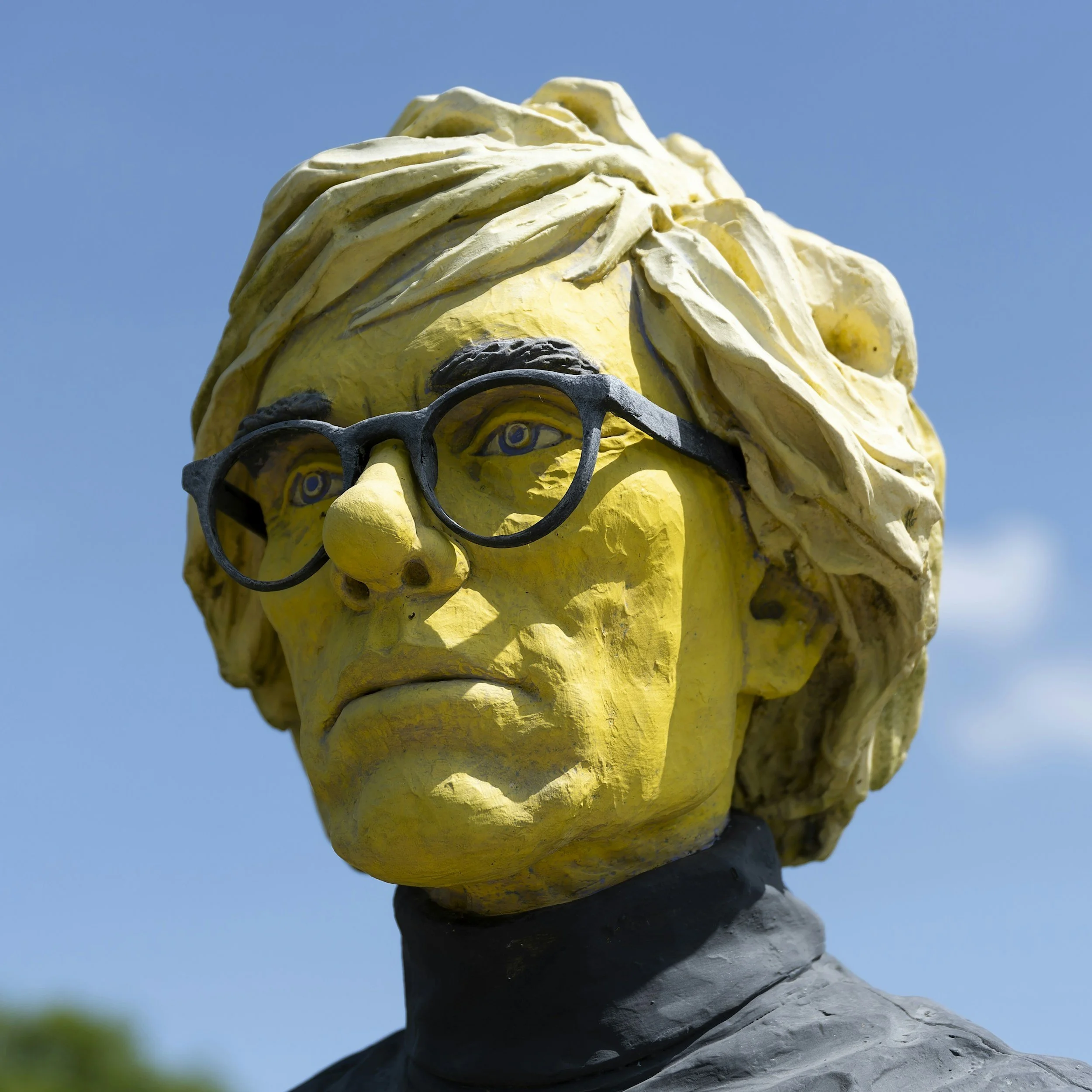
The Archivist Behind Andy’s Figments
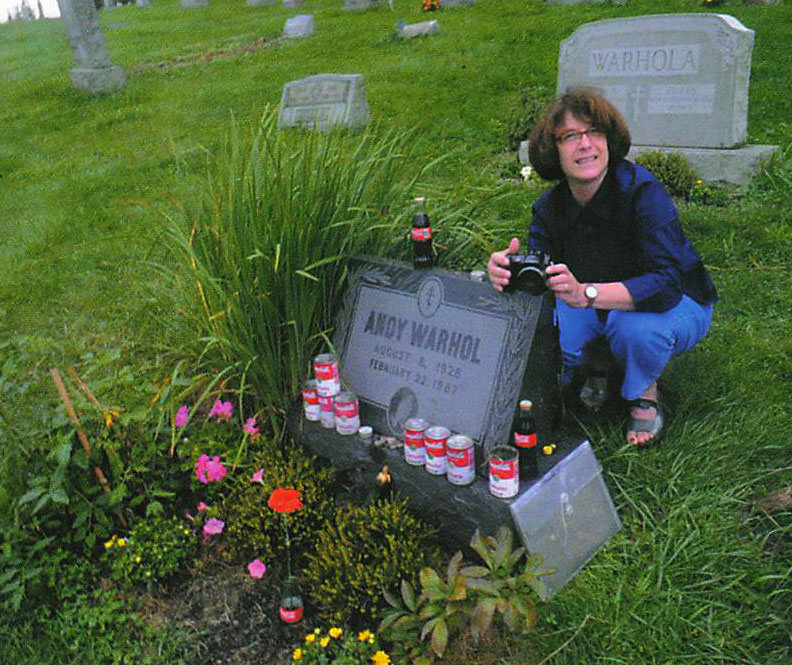
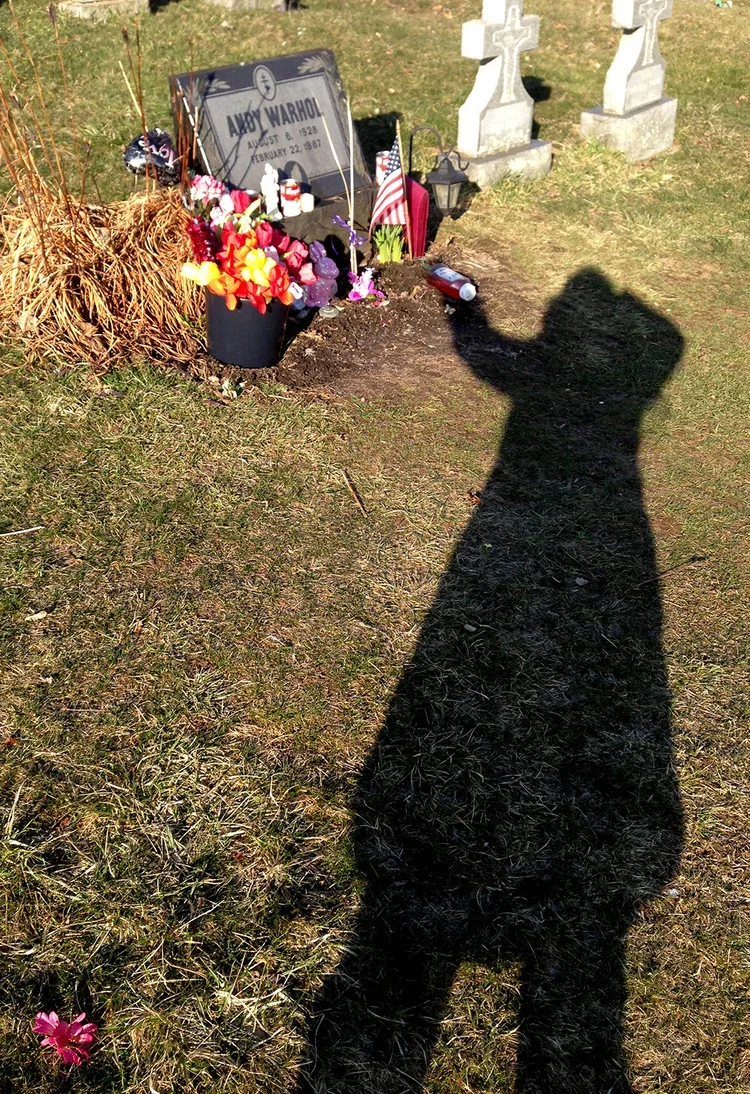
Madelyn Roehrig is the artist and archivist behind Andy's Figments: The Andy Warhol Gravesite Living Archive, an ongoing project she began in 2009 at Andy Warhol's gravesite in Pittsburgh. What started as a photographic record of the changing gravesite evolved into a living archive about the people who visit Andy and the relationships they continue to form with him after his death.
Through photographs, films, handwritten notes, objects, performances, and conversations, Madelyn documents what people bring to the gravesite and what they leave behind. The archive now includes approximately 3,000 handwritten notes, 2,300 objects, 13 films, thousands of daily tombstone and everyday images, and 1,350 postcards created by artist Paul LeRoy Gehres. At its heart, Andy's Figments is about people, their stories, memories, humor, grief, creativity, and the unexpected ways Andy continues to be part of their lives.
Andy's Figments has been exhibited and presented nationally and internationally. In 2013, Andy's Tombstone, Edition II received an Acquisition Award at the Associated Artists of Pittsburgh Annual Exhibition at the Carnegie Museum of Art and entered the museum's permanent collection. In 2014, the work received First Prize, the Bellinger Award, at the Chautauqua Annual Exhibition of Contemporary Art, juried by art critic Jerry Saltz.
Madelyn's films and Figments work have been exhibited and screened at The Andy Warhol Museum, and the project was featured on NPR's Morning Edition. She has presented Figments: Conversations with Andy through Osher Lifelong Learning at the University of Pittsburgh and co-taught Andy Warhol: Life and Afterlife at Chautauqua Institution with Andy's nephew, Donald Warhola.
In 2019, Figments: Conversations with Andy traveled to Athens, Greece, where her films were presented in the Andy Warhol Room at Alexander Iolas's villa as part of Let's Supper, Mr. Iolas | Resurrection RE, an international exhibition exploring the relationship between Iolas and Warhol and its connection to Warhol's Last Supper works.
Madelyn's artistic practice began long before Andy's Figments and has crossed boundaries among photography, film, installation, painting, printmaking, and alternative photographic processes. Her Clearview Loop photographic series documents the Mt. Lebanon, Pennsylvania, neighborhood where she lived, a community that developed around the trolley loop that carried people to and from Pittsburgh. The series is now part of the Heinz History Center collection in Pittsburgh.
She has worked extensively with gum bichromate, silver gelatin, and other alternative photographic processes, with works exhibited and held in museum and private collections. Her photographic book 14 Mailboxes was selected for the 2005 Photo National at the Lancaster Museum of Art and, that same year, for the 18th Annual National Juried Photography Exhibition at the Barrett Art Center in Poughkeepsie, New York.
Another major body of work, RP-Shooter, combined photography, video, and installation to examine how images of terrorism enter our homes through television and become part of everyday life. The project was exhibited at Harlan Gallery at Seton Hill University, Carnegie Mellon University Art Gallery, and Silver Eye Center for Photography in Pittsburgh.
Film has also been an important part of Madelyn's work. Her short films include Fernscape, an imagined world in which ferns take over the earth; Blue Plate Special, an award-winning film about a man whose encounter with a stink bug transforms him into his younger self; and Transported Traditions, an autobiographical work about her life, family, and the traditions she carries with her.
Madelyn holds an MFA in Visual Art from Vermont College of Fine Arts and an MPM in Arts Management from Carnegie Mellon University's Heinz College. For more than two decades, she worked at the Carnegie Museum of Art in Pittsburgh, where she developed and directed studio art and art history programs. Bringing artists, art, ideas, and people together became an important part of her life and continues to influence her work as an artist.
She now lives and works in the South Carolina Lowcountry, where the landscape has become both subject and material. She is currently experimenting with cameras made from pluff mud and creating images through and from the mud itself, drawn to the marsh as a living environment of growth, decay, regeneration, memory, and change, and to the spiritual energy she experiences in the Lowcountry landscape.
Whether documenting a Pittsburgh neighborhood, examining images of terrorism, recording conversations at Andy Warhol's grave, or creating images from Lowcountry pluff mud, Madelyn's work continues to return to people and place, memory and transformation, and the traces we leave behind.
“The idea is not to live forever, it is to create something that will.”